Hale House
The Captain and Ann BarbaraHale House, the settlement house on Garland Street in Boston's South End, stands as the pivotal institution in Mary Antin's Americanization, the place where her "second transformation of my life" unfolds, as truly as her coming to America was the first great transformation. Situated in the midst of the labyrinth of narrow streets and alleys that constitutes the slum of which Harrison Avenue is the backbone and Dover Street a member, the settlement house carries a little sunshine into the grimy tenement homes of a district with almost no playgrounds. It is here that Mary, a girl who found spiders "absolutely the most loathsome creatures" she knew, is led to the Natural History Club and, through a lecture on those very creatures, has her eyes opened to the wonders of nature, touching her girlish happiness with the hues of the infinite. The house thus functions as the island of safety in the perilous torrent of tenement life, the lighthouse guiding the children of the slums toward their salvation.
Location and Setting
Hale House is not a grand edifice but a settlement house embedded in the congested heart of the South End ghetto. It sits on Garland Street, within the labyrinth of narrow streets and alleys that constitute the slum of which Harrison Avenue is the backbone and of which Dover Street is a member. This is a district where the City Fathers provide soap and water in the form of excellent schools, kindergartens, and branch libraries, but stop at the curbstone of the people's life, leaving no parks and almost no playgrounds. The house is thus a rare refuge, a place with plenty of work on its hands to carry a little sunshine into the grimy tenement homes. Its situation is crucial: it is a beacon of organized benevolence planted directly in the path of the drifting children of the slums, who are, as Mary insists, "all born to be saved."
Discovery and the Debating Club
It is Mary's brother Joseph who discovers Hale House. He starts a debating club and invites his chums to help him settle the problems of the Republic on Sunday afternoon. The club's first session is held in the family's empty parlor on Dover Street, but the numerous babies belonging to the establishment break up the meeting, leaving the Administration in suspense. The next meeting moves to Isaac Maslinsky's parlor, where Mrs. Maslinsky, at the sight of seven pairs of boys' boots scuffling on her cherished parlor carpet and the plush photograph album unceremoniously laid aside, orders the boys to clear out. The following Sunday, Harry Rubinstein offers his parlor, but his big brother Jake interferes, pelting the dignified chairman with peanut shells and mocking the speakers, calling them "kids" and jeering, "We've got to have free trade." Flesh and blood cannot bear this, and the political reformers adjourn indefinitely, the club in danger of extinction for want of a sheltering roof, until one of the members discovers that Hale House, on Garland Street, is waiting to welcome the club. There the debating club prospers in the genial atmosphere of the settlement house, growing from a little club to a big club as the little boys become young men, with Joseph, Isaac, and Harry winning prizes in public debates, becoming part of the multiple influence for good that issues from Garland Street.
The Natural History Club and the Spider Lecture
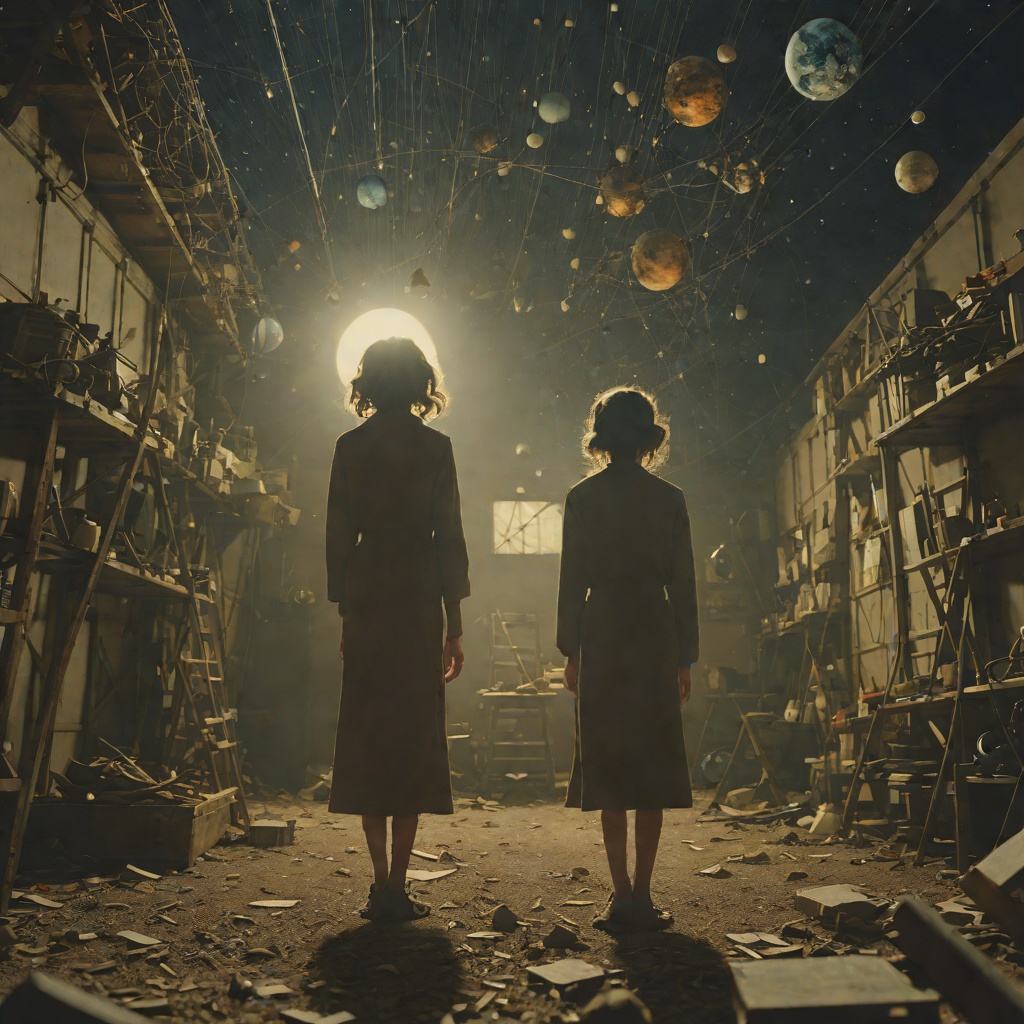
Dora follows Joseph to Hale House, joining a club for little girls which has since become famous in the Hale House district, where the leader artfully teaches the girls how to beautify a tenement home by means of noble living. Joseph and Dora are so enthusiastic that Mary has to go over and see what it is all about, and there she finds the Natural History Club. Mrs. Black, then the resident, persuades her to try the club in spite of her aversion for bugs, having tried her in various girls' clubs and found that she did not fit. The club is composed of adults, not people from the neighborhood but workers at Hale House and their friends, and they often have eminent naturalists, travellers, and other notables lecture before them. Mary's curiosity to see a real live naturalist induces her to accept Mrs. Black's invitation. On a Friday evening, she sits in a kindergarten chair beside the piano, prepared to have an agreeable evening, even if a little bored. The tall, lean gentleman with the frank blue eyes, Mr. Winthrop, reads the minutes, and then introduces the speaker of the evening: Mr. Emerson, "whom we all know as an authority on spiders." Mary's nerves contract into a tight knot, and she grips the arms of her little chair, determined not to run, recalling a hideous experience of long ago when she shook a spider out of her sleeve. But the lecturer has no menagerie in his pockets; he talks in a familiar way about different kinds of spiders and their ways, weaving across the doorway a gigantic spider's web with a ball of twine. Mary is fascinated by the progress of the web, forgets her terrors, and begins to follow the discourse. The drama of the spider's daily life becomes very real to her: his struggle for existence, his wars with his enemies, his wiles, his traps, his patient labors, the intricate safeguards of his simple existence, the fitness of his body for his surroundings. The whole picture of the spider's pursuit of life under the direction of definite laws fills her with a great wonder and leaves no room in her mind for repugnance or fear. It is the first time the natural history of a living creature has been presented to her under such circumstances that she cannot avoid hearing and seeing, and she is surprised at her dulness in the past when she had rejected books on natural history.
Transformation and Aftermath
Mary does not become an enthusiastic amateur naturalist at once, but the change is immediate and profound. On the next sweeping-day she stands on a chair, craning her neck, to study the spider webs she discovers in the corners of the ceiling, and one or two webs of more than ordinary perfection she suffers to remain undisturbed for weeks, although it is her duty, as a house-cleaner, to sweep the ceiling clean. She begins to watch for the mice that are wont to scurry across the floor when the house sleeps and she alone waked, even placing a crust for them on the threshold of her room and cultivating a breathless intimacy with them. By degrees she comes to a better understanding of her animal neighbors on all sides and begins to look forward to the meetings of the Natural History Club. This marks the beginning of her outdoor nature study, which she contrasts with her former bookworm days with a feeling of remorse and shame akin to a lover's. The club's excursions culminate in a day at Nahant, studying marine life in the tide pools, scrambling up and down the cliffs with no thought for decorum, bent only on securing starfish, limpets, sea-urchins, and other trophies of the chase, with a merry luncheon on the rocks and the tide rushing in to steal away their seaweed cushions. Hale House thus serves as the catalyst for a lifelong engagement with the natural world, a transformation as significant as her immigration itself, and a testament to the settlement house's power to mould the restless children on the street corners into noble men and women.